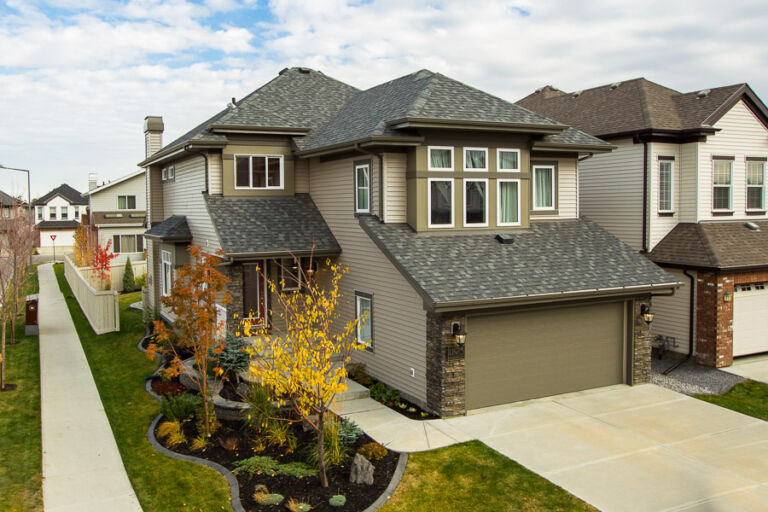
I have sold homes in Edmonton since 2011, and I look at these estimates the way I hope my clients do: as a rough range, not a value. Here is why they drift here, and when they are close enough to trust.
How these estimates are built
Sites like HonestDoor use what is called an automated valuation model, or AVM. The model takes what is publicly known about your home and weighs it against what similar homes nearby have sold for. HonestDoor describes its own inputs as monthly sales data from every neighbourhood, supply and demand trends, assessment data, and permit records, run through machine learning models, with estimates updated monthly. Other tools work the same basic way.
Notice what is not in that list. Nobody from the website has been inside your home. The model works from records, and records capture only part of what a buyer is paying for.
Why Edmonton is hard for them
Your assessment is not your market value. A big input to these models is your property tax assessment. In Edmonton, that assessment is a mass appraisal prepared for tax purposes, and it reflects market conditions as of July 1 of the previous year. It is built to be fair across thousands of similar properties, not precise about yours. It knows nothing about your renovated kitchen, your tired furnace, or the infill that went up next door. When the market has moved since that July 1 date, the estimate is partly built on last year's market.
The model cannot see condition. This is the largest gap. Two houses on the same street, identical on paper, can differ by $50,000 or more on condition alone, and I have seen exactly that here. A finished basement, a new roof, updated mechanicals, or the opposite, years of deferred maintenance, are all invisible to a model working from public records. HonestDoor knows this about itself: it invites homeowners to submit details of renovations, including work that never needed a permit, precisely because its data does not capture them otherwise.
Condos and detached homes are different problems. A standard condo in a large building, with similar units selling regularly, gives a model plenty to work with. A detached home in an established neighbourhood, where every house has had forty years of different owners and different renovations, gives it far less. The more a home differs from its neighbours, the more the model falls back on averages.
New areas have thin records. In newer neighbourhoods, many homes have never resold, and the comparable sales a model needs are scarce or drawn from homes that are not truly comparable. Estimates in fast-growing areas can swing as new sales data arrives, because each new sale carries more weight than it should.
Unique properties have no comparables. Acreages, character homes, homes with legal suites, unusual lots, and anything one of a kind on its street are where automated estimates are weakest. The model still produces a confident-looking number. It just is not built on much.
When the estimate is good enough, and when it misleads
If you are simply curious what your home might be worth, or you want a rough sense of whether your neighbourhood is rising or flat, the online estimate does that job fine. It is also reasonable for a first look at a standard condo or a newer suburban home where similar properties sell often.
It misleads when money depends on the answer. Price a listing too high off an algorithm and the home sits while buyers move on. Price too low and you leave money on the table that a proper read would have caught. It also misleads in estate settlements, separation agreements, and refinancing decisions, anywhere a number has to be defended. There, the estimate is a conversation starter, nothing more.
What a proper pricing read involves
A real valuation starts with the same comparable sales the model uses, then does the work the model cannot. The comparables are chosen by hand, on your street or as close as possible, and adjusted for the differences that matter: condition, renovations, finished space, lot, and how the market has moved since each sale closed. Someone actually looks at your home and accounts for the things no record shows. That adjusted number is the one a buyer's lender and appraiser will work from, and it is the only one worth planning a sale around.
If you would like that read on your home, I do these personally, from comparables rather than an algorithm. You can request one through my home value page. No pressure either way. If the online estimate was all you needed, you already have it.
Related: What Is Your Edmonton Home Worth? · Preparing Your Home for Sale in Edmonton · Edmonton Market Update · Watch: Selling in Edmonton, Start to Finish (video series)